
Finding a project management platform that adapts to your workflow and scales from small teams to enterprise requirements is harder than expected for agencies and startups. Many tools limit integrations, charge for advanced analytics or require long implementation cycles that delay value and complicate onboarding. This article compares pricing, customisation, reporting and integration features across six project management platforms so you can choose the best fit for your team’s methodology and size.
Table of Contents
Price & Accountants

At a Glance
Core services start from £249 per month, with a Black plan from £1,999 per month, offering tiered packages aimed at startups through growth-stage firms. The practice is London based and focuses on cloud accounting, R&D tax credits and funding readiness for tech startups.
Core Features
- Cloud accounting setup and review to migrate or optimise ledgers and reporting, typically using modern stacks such as Xero and connected apps.
- Company accounts preparation and management accounts delivered on a cadence that suits founders and investors.
- R&D tax credits guidance to identify qualifying activity and prepare claims that support cash recovery against development costs.
- Funding support and share structuring advice to make companies investment ready for pre-seed through Series A rounds.
- Payroll, VAT and pension administration handled alongside corporate and directors’ tax planning.
Key Differentiator
Price & Accountants combines hands-on cloud accounting with specialist funding and R&D expertise targeted at tech startups. That mix lets them align bookkeeping and tax positions to investor expectations, rather than treating advisory and compliance as separate services.
Pros
- Specialist support for tech startups seeking funding. Their experience with funding structures and investor documentation reduces surprises during due diligence.
- Flexible tiered pricing plans that scale from basic bookkeeping to outsourced finance director services. The tiers make monthly budgeting predictable as your headcount and reporting needs grow.
- R&D tax credits guidance that targets both claim accuracy and documentation. For teams investing in product development this frequently unlocks sizeable cash refunds.
- A proactive approach to tax planning and compliance. The firm handles VAT, payroll and year-end accounts so founders spend less time on routine tasks and more time on product and growth.
- Practical help getting cloud accounting live quickly. Faster setup means management accounts arrive sooner and you can present timely numbers to investors.
Cons
- Pricing may be high for very small startups or sole practitioners on tight budgets, particularly if you only need intermittent bookkeeping rather than a retained service.
Who It’s For
Tech startups and small to medium enterprises in London that plan to raise investment and need accounting, tax and funding-facing advisory in one place. Not aimed at large corporate finance teams or highly regulated industries with bespoke compliance needs.
Unique Value Proposition
Founded in 2013 by Rahamut Bhuiyan, Price & Accountants pairs rapid cloud accounting implementation with active R&D claims and funding support so founders can show investor-ready financials sooner. That single operational shift reduces the gap between product milestones and credible financial reporting.
Real World Use Case
A London-based startup used Price & Accountants to switch to cloud accounting, prepare monthly management accounts and submit an R&D tax credit claim. The combined work shortened their investor pack turnaround and helped when negotiating a seed round.
Pricing
Core services from £249/month. The Blue plan is £549/month. The Black plan starts from £1,999/month. Packages are tiered to add bookkeeping, payroll, FD-level advisory and funding support as needs evolve.
Website: https://priceandaccountants.com
ITM Platform
At a Glance
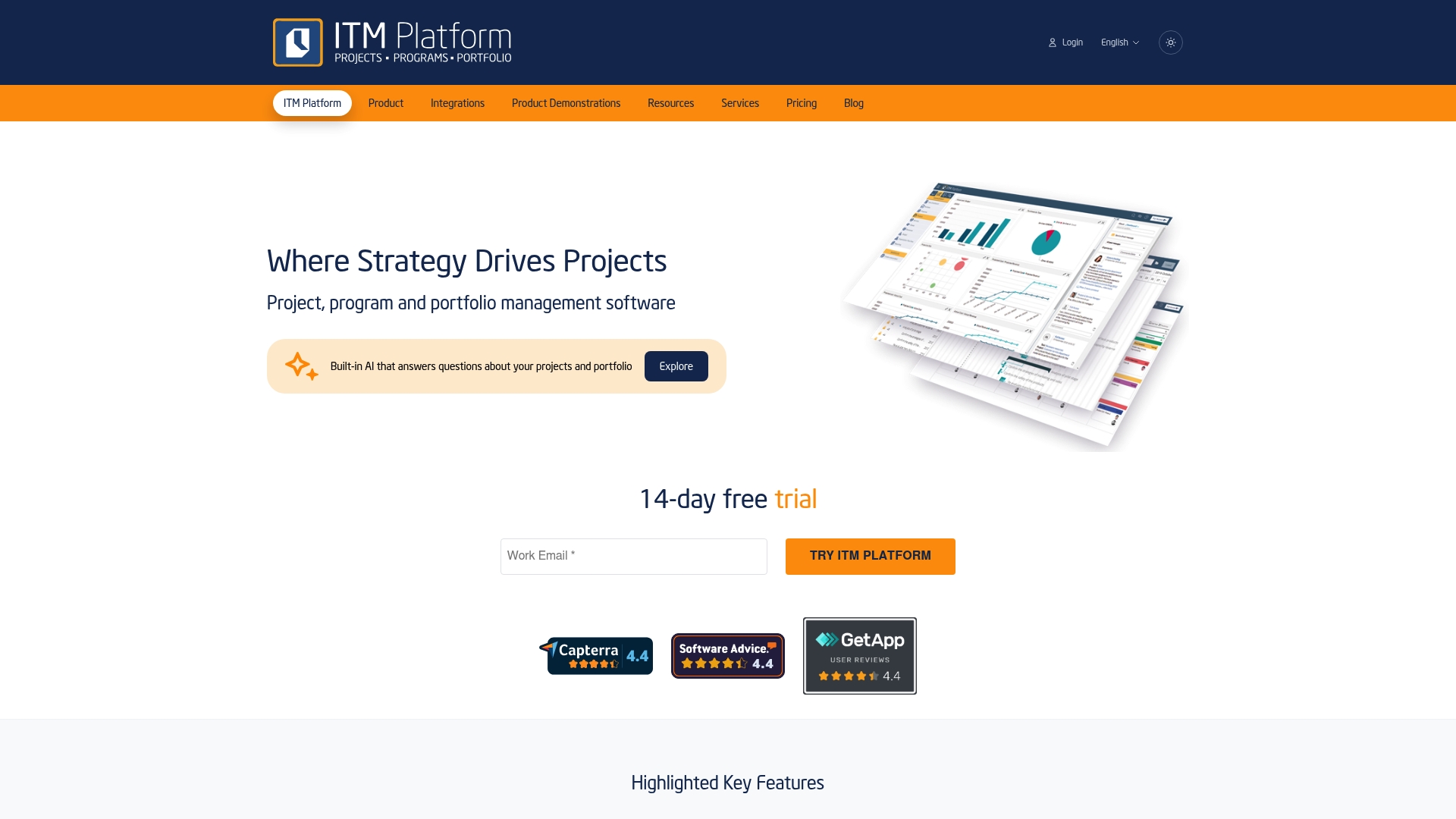
The vendor describes ITM Platform as offering quick deployment and an intuitive interface that gets teams managing portfolios in days rather than months. It is a web-browser only tool aimed at organisations that need central oversight without a heavy setup programme.
Core Features
ITM Platform bundles portfolio and project management capabilities for planning, tracking, and reporting across multiple projects. The interface prioritises clarity so stakeholders can scan status, risks and milestones without drilling through menus.
The product also highlights a strong integration architecture, allowing project data to flow into other systems rather than forcing manual exports. Setup is deliberately concise so teams can start governance and prioritisation fast.
Key Differentiator
The clear selling point is speed of adoption. ITM Platform focuses on a short implementation cycle and a shallow learning curve so portfolio managers and PMOs can get oversight working quickly. That rapid adoption trade off means depth in specialised features is sometimes secondary to usability.
Pros
- Effective for portfolio oversight. The layout and project roll ups make it straightforward to compare status across dozens of projects without custom dashboards.
- Rapid implementation reduces internal rollout costs. Teams report getting to first value in days rather than weeks which shortens the change management window.
- User-friendly interface helps stakeholders who dislike heavy PM tools to engage with project reporting and review cycles.
- Integration capabilities let you centralise data. If you already have finance or resource systems the platform is designed to ingest and share project data.
Cons
- Web-browser only operation means no native desktop client which some power users prefer for offline work.
- Native Gantt chart independence is limited so advanced scheduling may feel constrained compared with dedicated scheduling tools.
- Reporting feature set is basic relative to some competitors that offer deeper analytics and custom report builders.
- Customer experience varies. Some users describe the support and interface cohesion as disjointed which suggests product polish is uneven.
When It May Not Fit
If your programme requires advanced scheduling features or complex resource levelling you will likely find the Gantt and scheduling tools insufficient. Teams that need rich, custom reporting or an offline desktop client should look elsewhere.
If you require an enterprise support SLA or tightly coupled professional services for rollout the variable support experience above may be a blocker.
Who It’S For
Organisations that run project portfolios and want a web-based solution with low rollout friction. Ideal for PMOs, mid-sized professional services firms and functional leads who need a single pane of glass for project alignment rather than deep scheduling controls.
Real World Use Case
A mid-sized company with projects across product, IT and marketing used ITM Platform to centralise portfolio oversight. Portfolio managers used the platform to align projects against strategic objectives and to produce stakeholder-ready status reports without manual consolidation.
Pricing
The product data lists pricing as not applicable and presents the listing as informational only. Contact the vendor for current licence models and any implementation fees.
Website: https://itmplatform.com
OpenProject
At a Glance
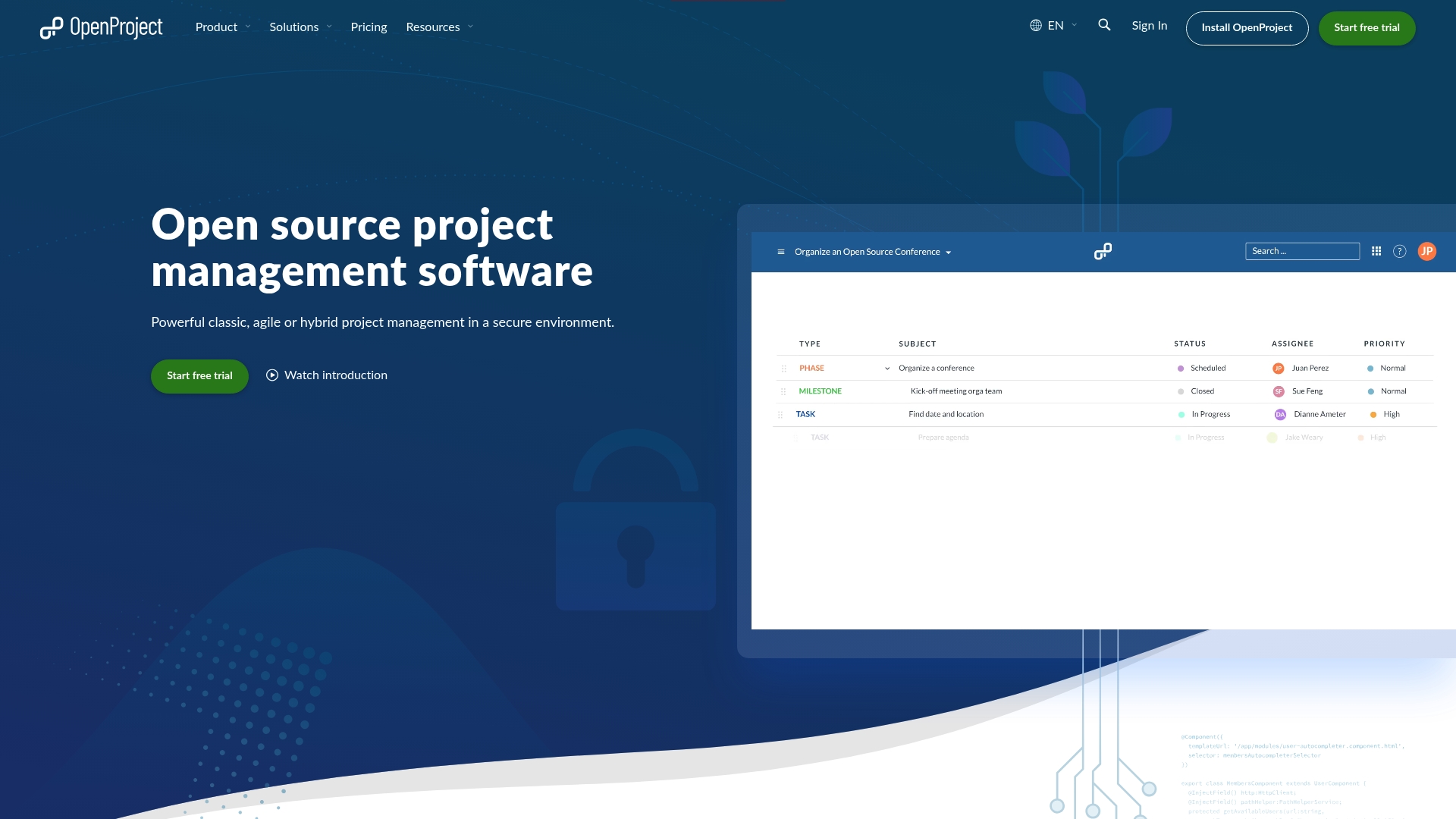
The vendor advertises both self-managed and hosted deployment options, letting organisations keep data on premises or choose their cloud of record. That mix of open source code and deployment flexibility is the standout detail for teams with strict data sovereignty requirements.
Core Features
- Gantt charts for project planning and scheduling, with dependency handling and baseline comparison.
- Agile boards that support Scrum and Kanban workflows alongside classic project views.
- Time tracking and cost reporting tied to tasks and versions for project accounting.
- Document sharing with collaborative editing, custom workflows and attribute fields for bespoke processes.
Key Differentiator
OpenProject is open source with deep customisation and multiple hosting choices. That makes it better suited to organisations that want to run software behind their firewall or adapt workflows at the field level. It is not a substitute for accounts receivable tools like Upflow.io; it focuses on project governance rather than invoice collection.
Pros
- Open source: No licence lock‑in and the ability to host on premises lowers long term vendor dependency and supports strict compliance regimes.
- Flexible deployment options reduce the need to change tooling when policy or regulatory needs shift. Self‑managed or hosted, pick what fits your control model.
- Project planning covers both waterfall and agile; teams can use Gantt and Agile boards without juggling separate tools.
- Built‑in time tracking and cost reporting give finance teams the data they need for project P&L and budget reconciliations.
- Migration support for Jira and integrations with common developer tools smooth adoption for engineering teams.
Cons
- Resource management can be burdensome and lacks resource status notifications, which makes capacity planning less immediate for delivery managers.
- Scheduling and status views can feel clunky compared with specialised portfolio tools; some users report frustration with calendar and workload filters.
- Steep learning curve for teams without an admin or process owner, especially when you first enable custom workflows and attributes.
When It May Not Fit
If your primary requirement is automated cash collection or invoice chasing, this is the wrong category of tool. Also avoid OpenProject if you need lightweight, zero‑config project boards or instant resource status alerts out of the box. Organisations without IT support will find self‑hosting adds operational overhead.
Notable Integrations
OpenProject offers connectors to common storage and development platforms. Supported integrations include Nextcloud for file hosting, OneDrive and SharePoint for document sync, and both GitHub and GitLab for source control linkage.
Who It’s For
Teams that want an open source, customisable project management platform with flexible hosting choices. Typical users are research groups, public sector teams, and engineering organisations that require data sovereignty or heavy workflow customisation.
Real World Use Case
A research university runs multi‑year, cross‑disciplinary grants on OpenProject. Custom workflows mirror funder milestones, time tracking ties to cost centres for reporting, and self‑hosting keeps sensitive data inside the university network.
Website: https://openproject.org
Wrike
At a Glance
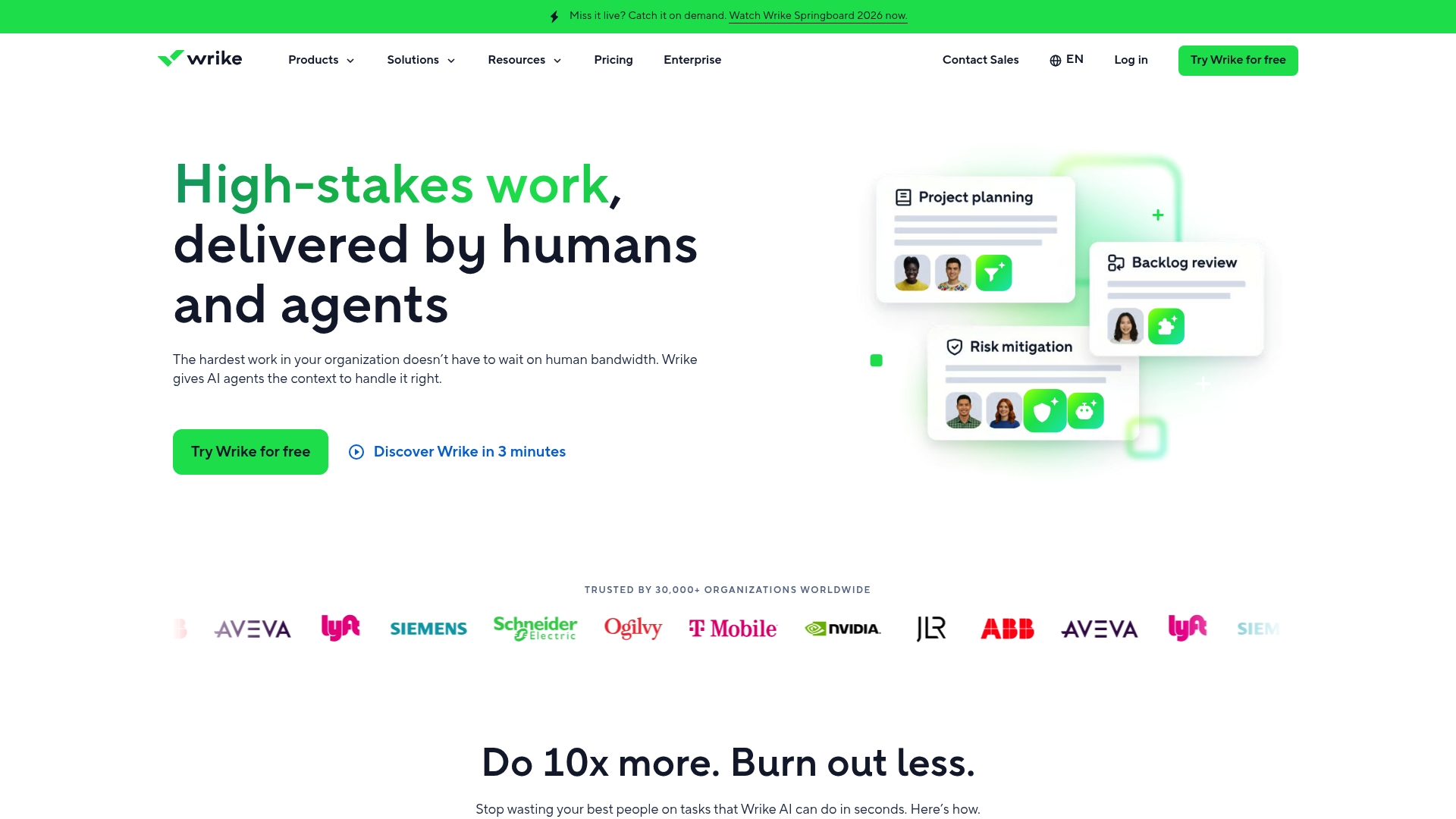
The vendor reports over 30,000 organisations use Wrike, a platform that pairs traditional project controls with AI powered automation and advanced reporting.
Wrike targets medium to large teams that need detailed workload visibility and customised workflows rather than a lightweight task list.
Core Features
Wrike provides task, project and workflow management with a strong set of visual tools and reporting.
- Whiteboard for visual collaboration and rapid brainstorming.
- Gantt charts and Kanban boards for scheduling and status tracking.
- AI powered automation and insights to reduce routine work and flag delays.
- Customisable dashboards and advanced reports for real time analytics across projects.
Key Differentiator
Wrike mixes a wide feature set for project control with AI powered automation and deep customisation, a combination that is pitched at enterprise scale. The product’s configuration options let you map complex processes and extract resource insights across large programmes.
Pros
- Flexible workflows adapt to departmental processes so teams do not force their work into a single rigid structure.
- Centralises communication and project data, which reduces lost context when handovers occur between teams.
- Strong reporting and resource views give finance and operations teams measurable insight into capacity and utilisation.
- Automation reduces repetitive task routing and approvals, saving manual effort on recurring processes.
- Highly customisable controls let administrators shape permissions, fields and templates for different business units.
Cons
- New teams face a steep learning curve; administrators need time to design folders, templates and permissions before users are productive.
- The product data notes limited native integrations for some specialised systems, so you may need third party middleware to join every tool in your stack.
- Report customisation can be complex when aggregating many projects; combining multiple data sources requires careful configuration.
When It May Not Fit
If you need a minimal, zero configuration tool for a small team, Wrike’s setup overhead will be a hindrance rather than a benefit.
Organisations that demand out of the box integrations for niche software may prefer a vendor with prebuilt connectors. Teams that require simple, spreadsheet style reporting will find Wrike’s reporting model heavier than necessary.
Notable Integrations
Wrike integrates with common collaboration and CRM tools used by finance and product teams.
- Salesforce, Slack, Google Drive
- Microsoft Teams, Zoom, Adobe Creative Cloud
Who It’s For
Medium to large organisations that require scalable, customisable project management with automation and enterprise reporting. The typical buyer is a PMO, operations leader or head of delivery managing cross functional programmes.
Real World Use Case
A marketing agency uses Wrike to run multiple campaigns concurrently, automates task assignments based on role and workload, and publishes real time performance dashboards for stakeholders, reducing manual reporting and coordination time.
Pricing
Wrike offers a free basic plan and paid tiers for teams and enterprises. The Team plan begins at approximately $10 per user per month and higher tiers add more AI, automation and security features. Pinnacle and Apex enterprise options use custom pricing.
Website: https://wrike.com
Zenkit
At a Glance
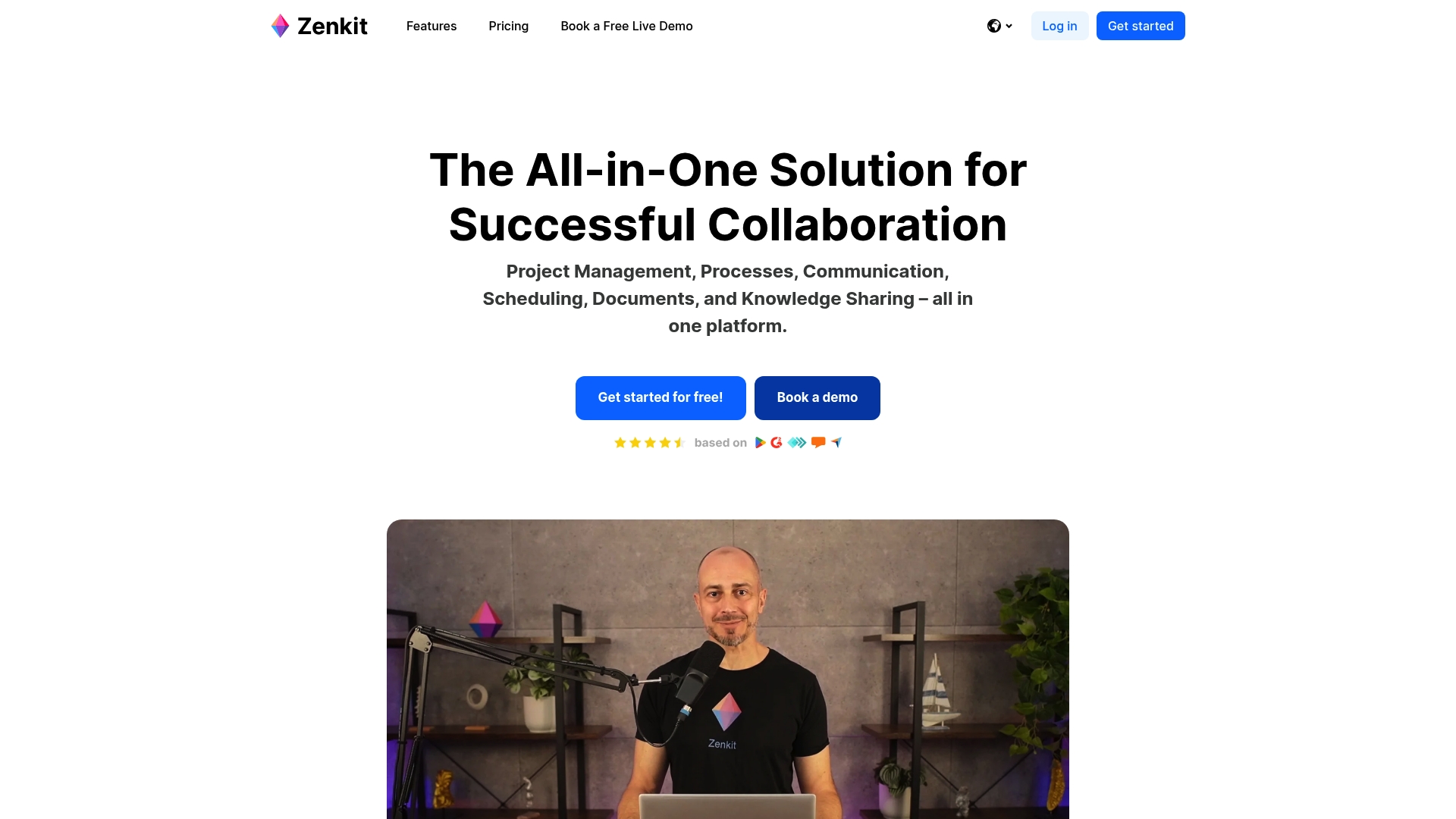
Zenkit’s marketing materials state over 720 report options in dashboards, a level of reporting granularity that is uncommon in mid-market project tools. The platform also advertises a generous free tier, making it easy for small teams to trial multiple views without immediate cost.
Core Features
Zenkit centres on a highly customisable workspace with Kanban, Gantt, mind maps, calendar and list views you can switch between instantly. Each view acts on the same dataset so you avoid duplication when changing perspective.
- Task management with subtasks, checklists and bulk actions for rapid triage.
- Real-time chat, comments, mentions and file sharing for team collaboration.
- Resource management and workload balancing plus advanced analytics for reporting.
Key Differentiator
The platform’s strength is its flexibility. You can model Agile sprints, Waterfall timelines or a mixed approach inside one project without building separate tools. That adaptability suits teams that experiment with workflows rather than locking into a single methodology.
Pros
- The multi-view model reduces context switching. A single task appears as a card, a row and a node across views, so work updates once and appears everywhere.
- The free tier lets small teams access core capabilities before committing to paid plans, useful for startups watching cashflow.
- Resource management and workload balancing are built in, which helps product managers level assignments across sprints and releases.
- Strong integration support via Zapier and an open API lets you connect Zenkit to bespoke stacks without waiting for native plugins.
- The mind-map view is genuinely helpful for early discovery and turning brainstorms into tracked work.
Cons
- Users report stability issues as features accumulate; complex, feature-rich configurations can become buggy and require administrative oversight.
- Documentation for advanced features is patchy; teams implementing custom reports or automations may need trial and error or developer help.
- Mobile apps have usability limits and reduced offline capability, so field teams might find the experience inconsistent.
- Licence costs rise for larger teams when enterprise features are required, making scaling more expensive than entry pricing suggests.
When It May Not Fit
If you need rock-solid, enterprise-grade stability out of the box with heavy concurrent mobile use, Zenkit’s limitations around mobile offline features and potential instability under complex setups could be problematic. Also, organisations that require exhaustive, prescriptive documentation for wide rollout will find gaps.
Notable Integrations
- Zapier for broad automation and many third-party connections.
- Native connectors including Google Drive, Gmail and Microsoft Teams for file and communication workflows.
- Calendar sync for scheduling and the open API for custom integrations.
Who It’s For
Small to large teams that want a single tool to handle different project methodologies and visual perspectives. Particularly well suited to product teams, agencies and small engineering groups that value configurability over rigid structure.
Real World Use Case
A product development team runs two-week sprints in Zenkit, tracking backlog in a mind map, planning in a Gantt and executing with Kanban. Bugs are triaged as subtasks and workload balancing prevents developer overload while integrations push status updates to Slack via Zapier.
Pricing
Plans start at €8 per month per seat for the Plus plan, with tiered increases for Business and enterprise plans that offer advanced permissions, SSO and dedicated support. Custom pricing is available for large organisations.
Website: https://zenkit.com
Hive
At a Glance
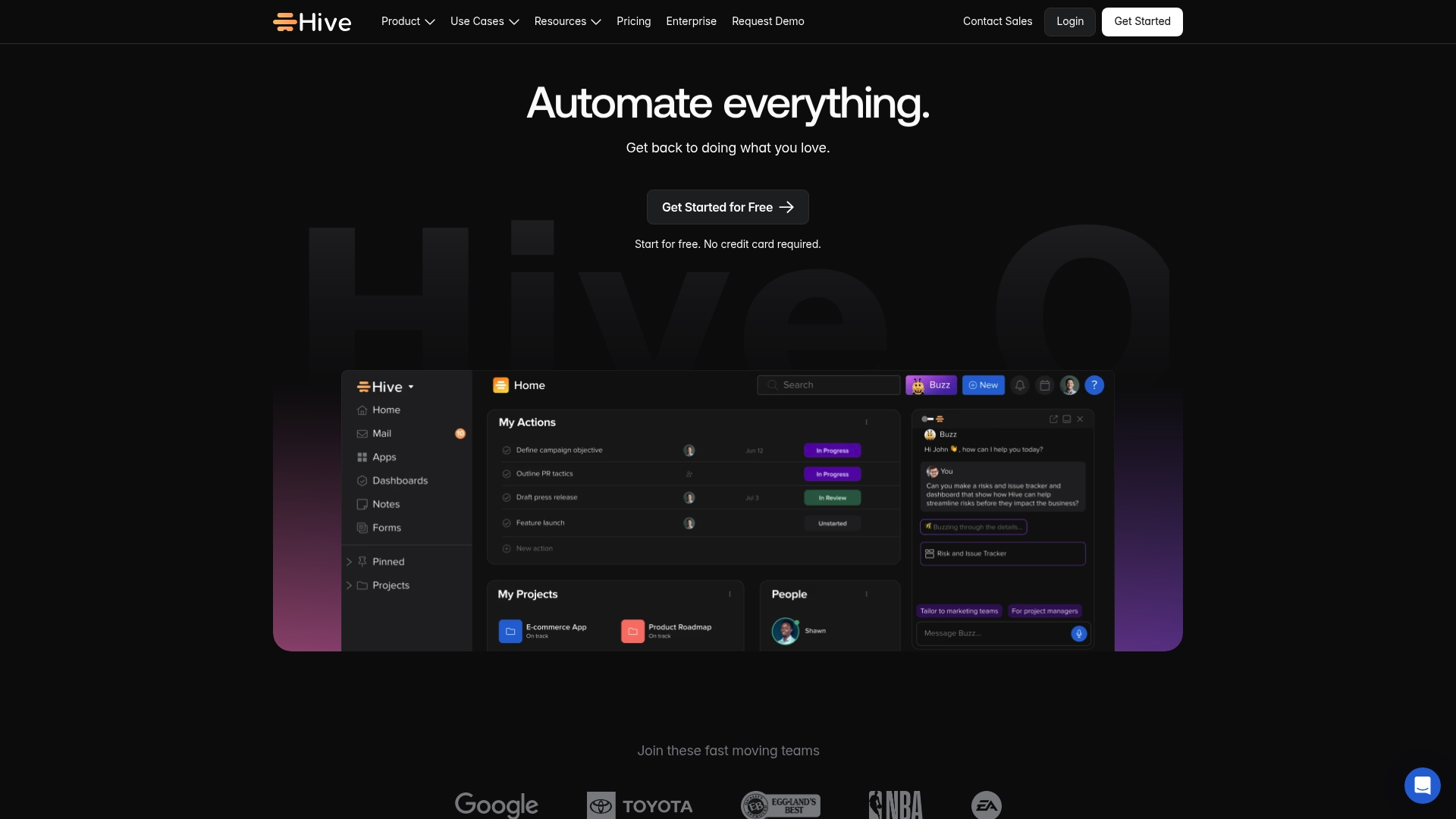
Hive’s marketing materials claim connections to over 1000 tools, a breadth that reduces manual integration work when you already use many third party apps. The platform pairs multiple project views with AI assistance for inbox and project automation, positioning it as a unified workspace for teams.
Core Features
- Multiple project views including Kanban, Gantt, Timeline, Table, Calendar and List for different planning needs.
- Hive Notes for real time collaborative documentation and meeting notes that live alongside tasks.
- Automations and workflows to remove repetitive steps and accelerate handoffs.
- AI tools such as Buzz for inbox management and automated project creation.
- Optional time tracking and external user collaboration as add ons for client work.
Key Differentiator
Hive is democratically built by its user community, which the vendor highlights as central to product decisions. That approach keeps the roadmap closely aligned with active user requests, producing incremental improvements that reflect practitioner needs rather than executive instincts.
Pros
- Quick onboarding and a clean interface help teams adopt Hive in days rather than weeks. New users can find the right view for their role without heavy configuration.
- Flexible project visualisation lets planners, creatives and directors look at the same data in different formats and reduce context switching.
- The combination of notes proofing and approvals keeps content and sign off in one place, which limits lost feedback across threads.
- Responsive customer support is reported by users to help with migration and custom automations, shortening the time to value.
- The integrations breadth above simplifies tool consolidation when you already rely on mainstream services.
Cons
- The mobile app experience is less refined than the desktop product which affects teams that rely on phones for task updates.
- Analytics remain basic, offering limited custom reporting for finance or portfolio level stakeholders.
- Portfolio management features are less prominent which makes enterprise grade programme oversight harder without external tools.
When It May Not Fit
If you need advanced portfolio reporting or built in resource capacity planning, Hive’s current feature set will feel thin. Teams that require rich analytics for CFO reporting will need a dedicated BI tool. Mobile first teams should trial the app before committing.
Notable Integrations
- Salesforce
- Slack
- Gmail
- Zoom
- Jira
- GitHub
- Dropbox
- Google Drive
Who It’s For
Teams and small to medium businesses that want a visually flexible project manager with strong integrations and automation. Good for marketing teams, agencies and product groups that value multiple views and collaborative notes.
Real World Use Case
A marketing agency uses Hive to run client campaigns across remote contributors. They automate recurring task creation, use Hive Notes for creative briefs and let Buzz create project shells from email requests, saving hours of manual setup each week.
Pricing
Starts with a free plan at $0. Paid tiers begin at $5 per month per user for Starter and $12 per month per user for Teams, with custom enterprise plans available. Optional add ons such as AI assistants and time tracking are billed separately.
Website: https://hive.com
Comparative Analysis
When evaluating providers for financial and operational advisory services, it becomes crucial to analyse differences in approaches, capabilities, and ideal client profiles.
Pricing and Scalability
One standout feature of Price & Accountants lies in its tiered pricing plans, designed to adapt as firms grow, starting with bookkeeping and advancing to funding support. Nonetheless, tools like Zenkit, with its feature-rich free tier, offer affordability for small startups, but lack the direct advisory services that Price & Accountants incorporates.
Target Client Expertise
Price & Accountants demonstrates a nuanced understanding of tech startups seeking funding. This is evident in their ability to align R&D incentives and funding strategies. By contrast, Wrike provides AI-driven project management for large-scale teams, excelling at operational oversight but not offering direct support for financial growth requirements.
Best Fit Recommendations
- Price & Accountants is excellent for tech startups in London prioritising R&D tax credits, funding alignment, and financial clarity.
- Choose Zenkit if your team needs cost-flexible project management tools with interchangeable perspectives on workflows.
- Opt for Wrike if your business demands precise project coordination across multiple stakeholders needing enterprise-level customisation.
- OpenProject is ideal for teams requiring self-hosting flexibility or compliance with strict data sovereignty laws.
Our Pick
Price & Accountants takes precedence for tech startups due to their integrated services supporting investment-readiness, bridging financial reporting and advisory needs. However, individuals should consider budget constraints, as competitors might provide cost-effective alternatives for teams not requiring high-touch advisory services.
Business and Project Management Services Comparison
The following table evaluates a selection of business and project management service providers, comparing their primary offerings to help you decide which aligns best with your specific requirements.
Provider NameCore OfferingKey DifferentiatorBest ForPricingMain LimitationPrice & AccountantsCloud accounting, R&D tax credits, funding readinessSpecialist funding and R&D aligned accountingTech startups planning to raise investment£249–£1,999 per monthPricing may be high for startups needing minimal servicesITM PlatformPortfolio and project managementSpeed of adoption with a web-based interfaceOrganisations needing quick portfolio oversightNot disclosedBasic reporting tools compared to some competitorsOpenProjectFlexible project management with open-source softwareCustomisable workflows and national hostingResearch groups, public sector teamsNot disclosedComplex workload management and steep learning curve for custom workflowsWrikeFull-scale project management with AI automationsAdvanced customisation options with automationMedium to large organisations$10+ per user per monthSteep learning curve and complex initial configurationZenkitMulti-view project workspaceFlexible configurations across multiple methodologiesSmall to mid-sized teams€8+ per seat per monthComplexity may lead to instability; documentation for advanced features lacks
Discover Accounting Support Made For Tech Startups and Scaling Businesses
Managing multiple project portfolios or financial workflows can feel overwhelming when juggling different tools like those explored in the “Top 6 upflow.io alternatives 2026” article. Priceandaccountants offers more than just compliance services. They specialise in cloud accounting, R&D tax credits, and investor-ready financial reporting crafted specifically for UK tech startups and high-growth companies.

Ready to reduce the complexity of your accounting and funding preparations? Visit Priceandaccountants to access expert support including outsourced finance director advisory and comprehensive bookkeeping. Connect now and take control of your company accounts and tax strategies with clarity tailored to help your business grow efficiently.
Frequently Asked Questions
What features does Priceandaccountants offer for tech startups seeking funding?
Priceandaccountants provides specialist support for tech startups, combining cloud accounting with R&D tax credits guidance to help identify qualifying activities for claims. Their hands-on approach allows founders to align bookkeeping and tax positions with investor expectations, making it an ideal choice for startups preparing for investment rounds.
How does Priceandaccountants compare to Wrike for project management?
Wrike offers a flexible platform with strong reporting and resource visibility, suited for medium to large teams needing detailed workload insights. Priceandaccountants, on the other hand, is tailored specifically for tech startups looking for integrated accounting and funding advisory, focusing on immediate financial reporting for investor readiness.
Which pricing tier of Priceandaccountants is best for small startups?
The core services of Priceandaccountants start at £249 per month, which is designed for basic bookkeeping needs typical of small startups. This pricing allows for predictable monthly budgeting as the company scales up its services over time.
Can I receive R&D tax credits guidance from Priceandaccountants if my activity is irregular?
Yes, Priceandaccountants offers R&D tax credits guidance aimed at identifying qualifying activities regardless of their frequency. This can be beneficial for startups looking to maximise cash recovery against development costs, making it easier to claim funds as they arise.
What is the turnaround time for management accounts with Priceandaccountants?
Priceandaccountants provides management accounts on a cadence that suits founders and investors, accelerating the delivery of timely financial insights. This rapid turnaround can be crucial for startups that need to present updated financials quickly during funding rounds.