

TL;DR:
- The UK startup funding process takes five to six months, emphasizing thorough preparation and legal groundwork. Using SEIS/EIS schemes with the correct funding instruments, like ASAs, helps founders attract UK investors and secure tax relief. Following a structured, time-bound approach ensures faster rounds, better terms, and successful capital raising.
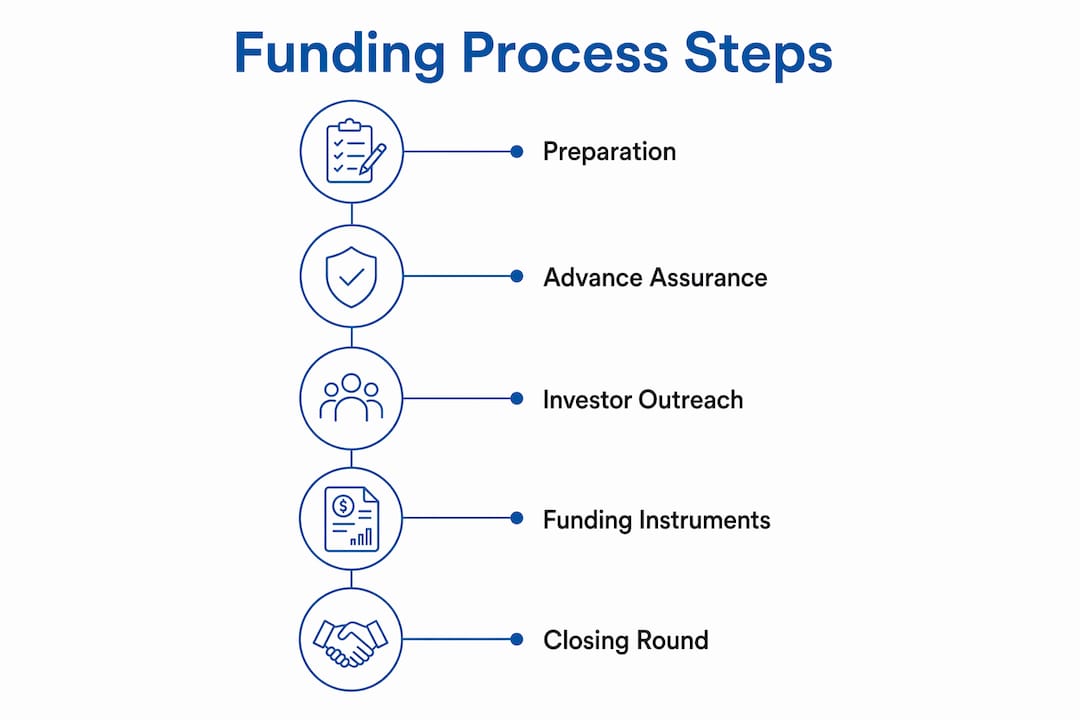
The startup funding process in the UK is a structured sequence of legal, financial, and investor-facing steps that takes most founders roughly five to six months from first preparation to wired funds. Two government schemes sit at the heart of almost every early-stage UK raise: the Seed Enterprise Investment Scheme (SEIS) and the Enterprise Investment Scheme (EIS), both administered by HMRC. Getting these right before you approach a single investor separates founders who close rounds quickly from those who stall. This guide walks you through every stage, from company eligibility to closing, so you can raise with confidence and avoid the most common delays.
What does the startup funding process UK require before you approach investors?

Preparation is the most underestimated phase of the entire funding process. Founders who skip it spend weeks scrambling for documents mid-negotiation, which signals disorganisation to investors and kills momentum.
The legal and financial groundwork covers four areas:
- Company eligibility. To qualify for SEIS, your company must be under 3 years old, have fewer than 25 employees, and hold below £350,000 in gross assets before investment. EIS thresholds are higher, but SEIS is the scheme most pre-seed founders target first.
- HMRC Advance Assurance. This is a letter from HMRC indicating your company is likely eligible for SEIS or EIS. It is not a formal guarantee of tax relief, but investors treat it as a green light. Without it, many angel investors will not commit.
- Cap table and founder agreements. Your share structure must be clean before you issue any new shares. Vesting schedules, founder agreements, and any existing convertible notes all need to be documented and consistent.
- Financial documents and pitch materials. Investors now expect proof of execution, not just a compelling idea. That means a financial model with unit economics, a data room, and a pitch deck that shows traction.
Pro Tip: Apply for HMRC Advance Assurance before you begin investor outreach. The process typically takes four to eight weeks, so starting early prevents it from becoming a bottleneck when a term sheet is on the table.
What funding instruments do UK startups use at pre-seed?
The choice of funding instrument shapes your legal costs, your timeline, and your SEIS/EIS compliance. Getting this wrong at pre-seed can disqualify your investors from claiming tax relief.
The Advance Subscription Agreement (ASA) is the UK standard for pre-seed rounds. It lets investors commit capital now in exchange for shares at a future priced round, without requiring an immediate valuation. ASAs keep cap tables cleaner than priced equity rounds and are structured to comply with SEIS and EIS rules. Legal fees for an ASA-based raise typically run to £2,500–£5,000 in solicitor fees, with a two to three week legal turnaround.
The SAFE (Simple Agreement for Future Equity) is an American instrument that some international investors prefer. SAFEs are faster to execute, but they carry a real risk of disqualifying investors from SEIS or EIS relief. If your investor pool is UK-based or includes angels who want tax relief, an ASA is the safer choice.
Priced equity rounds, where you agree a formal valuation and issue shares immediately, are rare at pre-seed. They cost significantly more in legal fees and require a level of financial maturity most early-stage companies do not yet have.
InstrumentSEIS/EIS compliantLegal costBest forAdvance Subscription Agreement (ASA)Yes£2,500–£5,000UK pre-seed roundsSAFERisk of non-complianceLowerInternational investorsPriced equity roundYes, if structured correctlyHighSeed and Series A
Pro Tip: If you have a mix of UK and international investors, ask your solicitor to draft an ASA with a SAFE-equivalent clause for non-UK investors. This preserves SEIS/EIS eligibility for those who want it.
How do you execute a UK funding round step by step?
The full fundraising timeline from preparation to wired funds runs approximately 90 days of preparation, followed by six to twelve weeks of active fundraising, and then two to four weeks of legal close. That is five to six months in total for a well-run process.
A practical step-by-step sequence looks like this:
- Months one to three: prepare. Complete your HMRC Advance Assurance application, finalise your cap table, build your data room, and draft your pitch deck. Do not approach investors until all four are ready.
- Week one of outreach: build your list. Identify 30–50 target investors, including angel investors, angel networks such as the UK Business Angels Association (UKBAA), and early-stage venture capital funds. Prioritise warm introductions over cold outreach.
- Weeks two to four: run parallel meetings. Coordinate investor meetings within a two to three week window. Simultaneous conversations create competitive tension and improve your terms. Sequential, one-at-a-time approaches reduce your leverage significantly.
- Weeks four to six: negotiate terms. Once you receive interest, move quickly to agree headline terms. Delays at this stage signal weak momentum to investors who are still deciding.
- Weeks six to eight: legal close. Your solicitor drafts and circulates the ASA or investment agreement. Investors sign, funds transfer, and shares are allocated. Respond to every due diligence request within 24 hours to avoid losing a committed investor.
Fundraising treated as a time-bound project with a hard six to twelve week active window consistently outperforms open-ended approaches. Rounds that drag beyond twelve weeks of active outreach often stall because early investors lose confidence.
How do SEIS and EIS tax reliefs help you attract investors?
SEIS and EIS are the most powerful tools available to UK founders raising early-stage capital. They reduce investor risk substantially, which means founders can close rounds faster and at better terms.
The key eligibility criteria and investor benefits are:
- SEIS offers up to 50% income tax relief on investments up to £200,000 per company. Investors can also claim loss relief and capital gains tax exemption on disposal.
- EIS offers 30% income tax relief on investments up to £1,000,000 per investor per tax year, with similar loss relief and CGT benefits.
- Advance Assurance is the critical first step. Securing it before investor conversations means you can confirm SEIS/EIS eligibility upfront, which removes a major objection from angel investors.
- Interaction with ASAs. ASAs are structured to preserve SEIS/EIS eligibility at the point shares are actually issued, not at the point of investment. This timing distinction matters for HMRC compliance.
HMRC Advance Assurance is a letter of intent, not a formal approval. Tax relief is claimed by investors after shares are issued, not when they sign the ASA. Founders who present Advance Assurance as a guarantee risk misleading investors and creating legal liability.
For a detailed breakdown of how these schemes interact with your share structure, the SEIS/EIS tax relief guide from Priceandaccountants covers the compliance requirements in full.
What are the most common pitfalls UK founders face when raising funds?
Most failed fundraising rounds share the same handful of mistakes. Recognising them in advance is the difference between a clean close and a six-month distraction.
- Raising too little. The 18-month rule advises raising enough to cover 18–24 months of operational runway. Founders who raise for 12 months find themselves back in fundraising mode before they have hit the milestones that justify a higher valuation.
- Treating fundraising as ongoing. Fundraising is not a background activity. It demands full attention for a defined period. Founders who treat it as continuous never create the urgency that closes rounds.
- Approaching investors sequentially. Single-investor approaches remove competitive tension entirely. Running parallel investor processes is the single most effective tactic for improving terms and closing speed.
- Messy cap tables. Investors scrutinise your cap table before they sign anything. Undocumented convertible notes, missing founder vesting schedules, or inconsistent share classes all trigger delays or withdrawals.
- Slow due diligence responses. Investors interpret slow responses as either disorganisation or a hidden problem. Build your data room before outreach begins and respond to every request within 24 hours.
Pro Tip: Set a hard close date for your round and communicate it to investors. A stated deadline creates urgency without pressure. It also gives you a natural reason to follow up with investors who have gone quiet.
Key takeaways
The UK startup funding process succeeds when founders combine SEIS/EIS compliance, the right funding instrument, and a time-bound investor outreach strategy executed in parallel.
PointDetailsPrepare before outreachSecure HMRC Advance Assurance and build your data room before approaching any investor.Use ASAs at pre-seedAdvance Subscription Agreements are SEIS/EIS compliant and cost £2,500–£5,000 in legal fees.Run parallel investor meetingsCoordinate meetings within a two to three week window to create competitive tension and better terms.Raise 18–24 months of runwayRaising less risks distress fundraising before you reach your next valuation milestone.Treat fundraising as a projectSet a six to twelve week active window with a hard close date to maintain investor momentum.
Why structured fundraising beats winging it: a founder’s perspective
The founders I see close rounds cleanly are not always the ones with the best product. They are the ones who treated fundraising as a project with a deadline, a checklist, and a team behind them.
The biggest mistake I encounter repeatedly is founders who start investor conversations before their Advance Assurance is in hand. An interested angel asks “are you SEIS eligible?” and the founder says “we’re applying.” That single answer costs weeks. The investor waits. Momentum dies. By the time the letter arrives, the investor has moved on to another deal.
SEIS and EIS are genuinely transformative for UK founders, but only when they are set up correctly and presented accurately. The distinction between Advance Assurance and actual tax relief approval trips up even experienced founders. Investors who understand the schemes well will probe this distinction. Founders who cannot answer clearly lose credibility at a critical moment.
The tax efficiency strategies that work best are the ones built into the company structure from day one, not retrofitted after the first investor conversation. Getting your accounting and legal foundations right before you raise is not overhead. It is the work that makes the raise possible.
— Rahamut
How Priceandaccountants supports your funding round
Priceandaccountants works with UK tech founders from pre-seed through Series A, handling the financial and tax compliance work that underpins a successful raise.

The team manages SEIS and EIS registration, HMRC Advance Assurance applications, and share structure compliance so your cap table is investor-ready before you send your first pitch deck. Priceandaccountants also prepares the financial models, funding documentation, and data room materials that investors expect to see during due diligence. For founders who need ongoing support, the strategic tax and advisory service provides outsourced Finance Director-level guidance throughout the fundraising process and beyond. With over 20 startup clients, some now valued at well over £50m, Priceandaccountants brings a proven track record to every engagement.
FAQ
What is the typical timeline for the UK startup funding process?
The full process takes approximately five to six months: three months of preparation, six to twelve weeks of active fundraising, and two to four weeks for legal close and funds transfer.
What is HMRC Advance Assurance and why do I need it?
HMRC Advance Assurance is a non-binding letter confirming your company is likely eligible for SEIS or EIS. Most angel investors require it before committing, as it confirms their tax relief position.
What is an Advance Subscription Agreement (ASA)?
An ASA is the UK-standard pre-seed funding instrument. It lets investors commit capital now in exchange for shares at a future priced round, and it is structured to comply with SEIS and EIS rules.
How much should I raise in my first funding round?
Raise enough to cover 18–24 months of operational runway. Raising less forces you back into fundraising mode before you have hit the milestones needed to justify a higher valuation.
Can I use a SAFE instead of an ASA for UK investors?
SAFEs carry a risk of disqualifying UK investors from SEIS or EIS tax relief. For UK-based angels, an ASA is the safer and more commonly accepted instrument.
Recommended
- Startup investment tips for UK founders: 2026 guide - Price & Accountants
- How to set up a UK company: a guide for startup founders - Price & Accountants
- Essential startup expenses: A founder’s guide to smart budgeting - Price & Accountants
- Essential accounting tips for UK tech startups scaling to Series A - Price & Accountants