

Loss-making, R&D-intensive SMEs can instead claim under ERIS, worth an enhanced 186% deduction and a 14.5% payable credit. Costs incurred before 1 April 2023 still fall under the old rates, so tranching by date matters more than ever.
TL;DR:
- Companies claiming under ERIS must carefully distinguish costs incurred before and after April 1, 2023, applying the correct old or new rates separately.
- Accurate tranche calculation is vital when accounting periods span rate changes, requiring detailed records of costs and dates to avoid HMRC queries.
- The 30% R&D intensity threshold is binary, so early testing and contemporaneous project documentation can prevent disqualification or disputes.
- Payable credits are limited by a cap based on PAYE and NIC liabilities, so forecasting these liabilities is essential to avoid overestimating refunds.
- HMRC expects detailed technical records, narrative descriptions of scientific uncertainty, and precise cost splits to successfully support an R&D claim.
Table of Contents
- Current R&D tax credit rates at a glance
- Who qualifies for ERIS and how the 30% intensity test works
- Calculating your claim: the tranche method and worked examples
- The PAYE and NIC cap: why your payable credit might be smaller than expected
- What HMRC expects to see in your claim pack
- Why the 30% cliff edge changes how tech firms should plan
- Get your R&D claim assessed properly, tranches and all
- Key primary sources and further reading
- Sources
Current R&D tax credit rates at a glance
The merged RDEC scheme replaced the old SME and RDEC schemes for most accounting periods starting on or after 1 April 2024, though the underlying rate change actually took effect for expenditure incurred from 1 April 2023 onwards. It delivers a taxable expenditure credit of 20% on qualifying R&D costs, regardless of company size, replacing the old split between the SME scheme and RDEC.
ERIS (Enhanced R&D Intensive Support) sits alongside the merged scheme for loss-making SMEs that spend heavily on research. Rather than a taxable credit, it gives an enhanced deduction and, where a company surrenders its loss, a payable cash credit.
Ring-fenced trades in oil and gas extraction have their own separate rules and are excluded from the merged scheme entirely, so North Sea operators need specialist treatment rather than the rates above.
These figures are why historical RDEC rates still matter today: any claim covering an accounting period that straddles 1 April 2023 needs the old and new rates applied separately, tranche by tranche, not blended into an average.
Who qualifies for ERIS and how the 30% intensity test works
Deciding between the merged scheme and ERIS comes down to two questions: is the company loss-making, and how R&D-intensive is it? Companies that are profitable, or only marginally engaged in research, default to the merged RDEC rate. ERIS is reserved for smaller companies that meet the SME size thresholds, are loss-making for the period, and pass the intensity test.
The 30% intensity threshold is calculated by dividing qualifying R&D expenditure by total relevant expenditure for the period. A company spending a significant amount in total with qualifying R&D costs above the threshold qualifies; another with a different spend may fall just short or meet it depending on how total expenditure is calculated, showing how sensitive the ratio is to what counts as total expenditure.
Before assessing eligibility, gather:
- Full cost breakdowns by project and by staff member
- Confirmation of loss-making status for the relevant accounting period
- Total company expenditure figures to calculate intensity accurately
- Details of any grants or subsidised funding affecting qualifying costs
Calculating your claim: the tranche method and worked examples
RDEC is never calculated as one blended rate across a whole accounting period if that period spans a rate change. HMRC’s own guidance confirms costs must be split into tranches and taxed at whatever rate applied when each cost was actually incurred. Get the tranche dates wrong and the whole calculation is wrong.
Here’s how a tranched RDEC calculation actually works, using HMRC’s own illustrative figures:
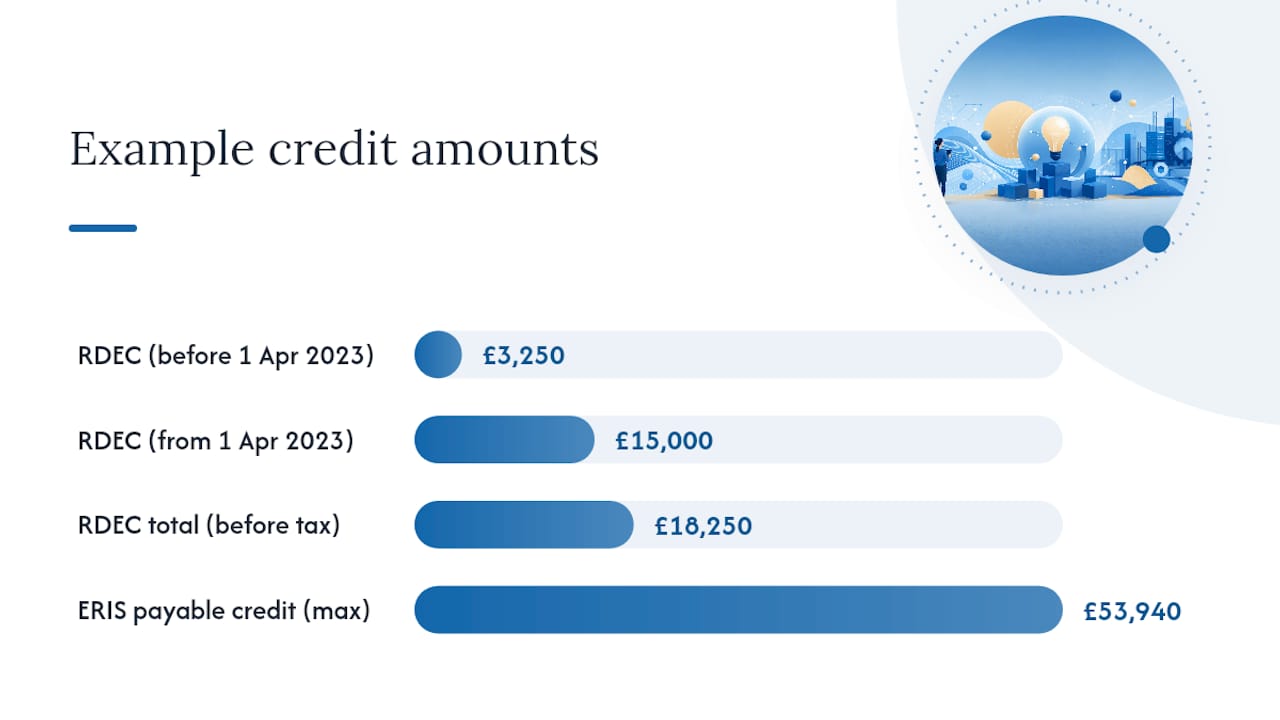
- Identify the qualifying expenditure incurred before 1 April 2023 and apply the 13% rate. On £25,000, that produces a credit of £3,250.
- Identify the qualifying expenditure incurred from 1 April 2023 onwards and apply the 20% merged rate. On £75,000, that produces £15,000.
- Add the tranches together for the total RDEC credit: £18,250 before tax, subject to corporation tax treatment and the PAYE cap.
An ERIS calculation runs differently. Take £200,000 of qualifying R&D spend for a loss-making, R&D-intensive SME: the enhanced 186% deduction produces £372,000 of allowable expenditure against profits. Where that creates or increases a loss, the company can surrender up to that loss and claim 14.5% of it as a payable credit, worth up to £53,940 on a fully surrendered £372,000 loss.
Pro Tip: When a project mixes qualifying and non-qualifying activity, keep contemporaneous timesheets that tie staff hours to specific R&D tasks. Apportioning costs after the fact, from memory, is one of the most common reasons HMRC queries a claim. If a project genuinely spans two accounting periods with different rates, get an adviser to check the tranche split before you file rather than after.
The PAYE and NIC cap: why your payable credit might be smaller than expected
Payable credits under both the SME-derived rules and ERIS are subject to a cap. The PAYE cap formula is £20,000 plus 300% of the company’s relevant PAYE and NIC liabilities for the period, unless the company meets specific exemption conditions.
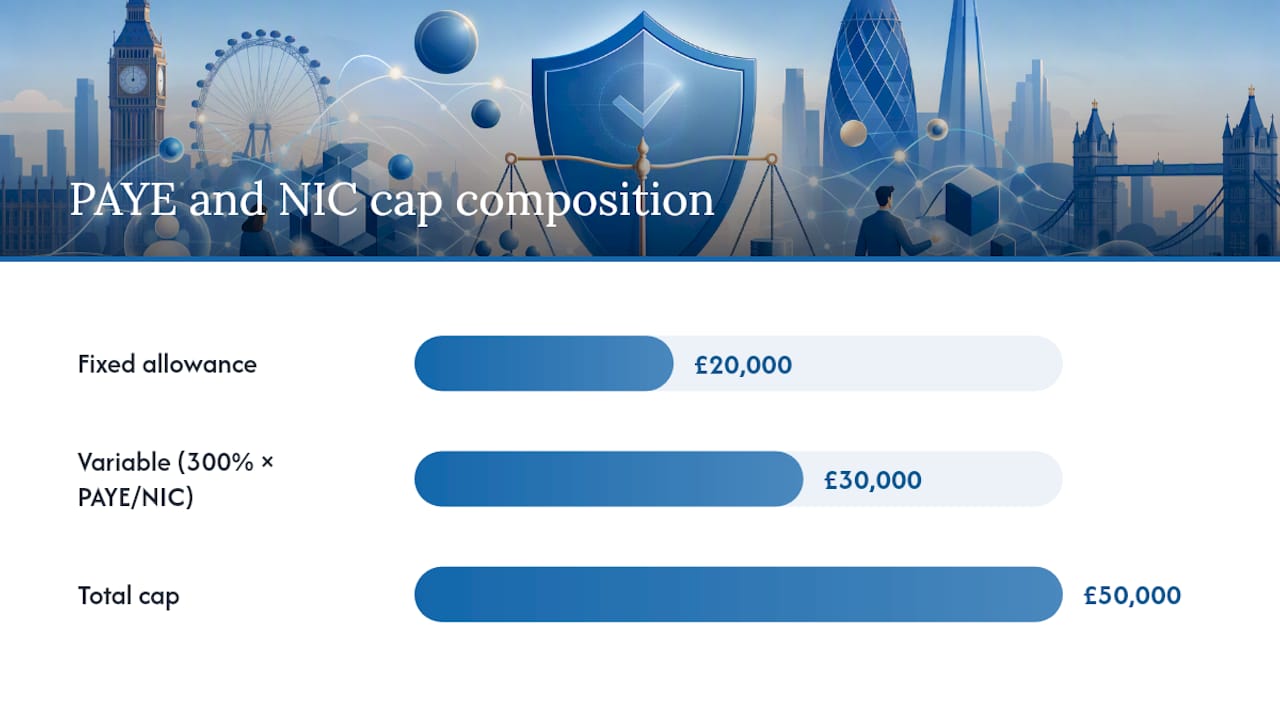
A business with only £10,000 of relevant PAYE/NIC liabilities has a cap of £50,000 (£20,000 + £30,000), regardless of how large its theoretical credit would otherwise be.
To manage this risk:
- Forecast PAYE and NIC liabilities alongside R&D spend, not after the claim is prepared
- Review payroll timing where directors or key staff are paid irregularly
- Check whether your company meets any of HMRC’s cap exemption conditions before assuming the worst
What HMRC expects to see in your claim pack
HMRC’s compliance guidance is explicit that a claim needs to demonstrate technological uncertainty and contemporaneous technical records, not just a cost schedule. Enquiries increasingly focus on whether the narrative actually explains what was uncertain and how it was resolved.
A defensible claim pack typically includes:
- Project narratives describing the technological or scientific uncertainty at the outset
- Timesheets or activity logs allocating staff time to qualifying work
- Cost schedules broken down by tranche and cost category
- Supplier invoices for externally provided workers and subcontracted R&D
- Board minutes or internal approvals evidencing project sign-off
Weak contemporaneous evidence and mis-tranched expenditure are the two most frequent triggers for HMRC enquiry. Getting the claim process right the first time matters more now than it did under the old two-scheme system, because HMRC’s scrutiny of merged-scheme claims has increased alongside the rate changes.
Why the 30% cliff edge changes how tech firms should plan
The intensity threshold isn’t a soft guideline, it’s a binary cliff. That gap is where most planning conversations should start, not end.
The recurring errors I see are mundane rather than exotic: costs tranched against the wrong date, and technical narratives written months after the work, from memory rather than contemporaneous notes. Neither is hard to fix if you catch it early.
Run an intensity test now, before your accounting period closes, and start collecting project narratives as the work happens rather than at claim time. That single habit shift resolves most of the disputes I see later.
— Rahamut
Get your R&D claim assessed properly, tranches and all
If the tranche calculations above made your head spin, that’s precisely the point where a specialist earns their fee. Priceandaccountants works exclusively with tech and fintech companies navigating exactly this kind of rate complexity, so eligibility reviews, cross-rate calculations and HMRC liaison are handled by people who do this daily, not annually.

Our R&D tax credit service covers the full process: an initial eligibility review to confirm which scheme applies, tranching and calculation for periods spanning rate changes, claim preparation, and direct liaison with HMRC if questions arise. We also support wider corporation tax planning so your R&D claim sits correctly within your broader tax position rather than as an isolated filing.
Key primary sources and further reading
- Gov
- Gov
- HMRC internal manual CIRD89710: RDEC calculation of credit
- Why professional tax advice matters for UK businesses
Sources
- Research and Development (R&D) tax relief: the merged R&D expenditure credit scheme and enhanced R&D intensive support
- Gov
- Gov
- Gov